Product
Chameleon
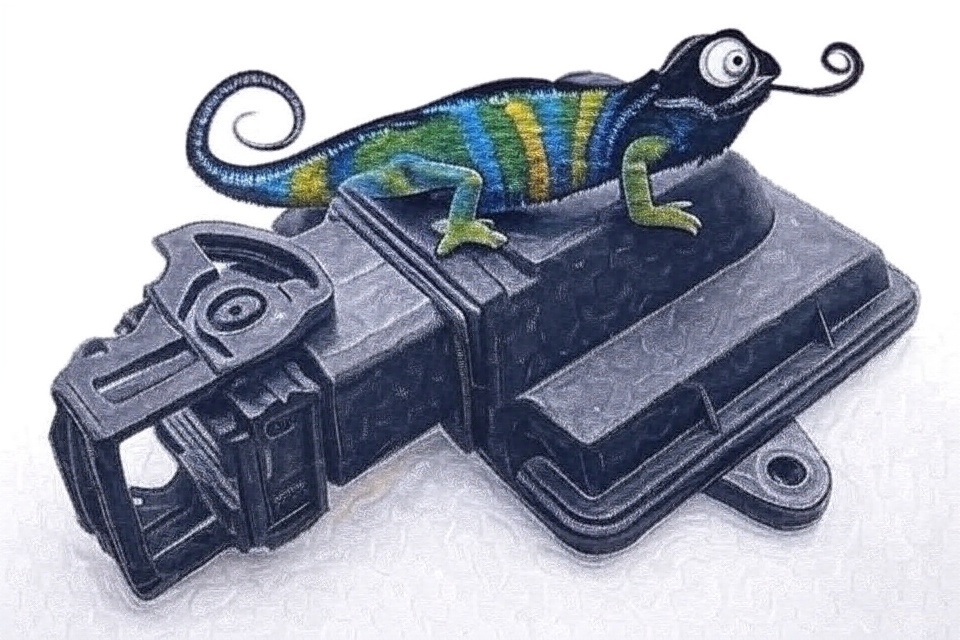
Automotive controllers have always been closed: closed hardware, closed software, closed ecosystems. You buy what's available, work within what's supported, and hope the vendor's roadmap aligns with yours.
Chameleon is different by design.
It's an open source hardware controller built around proven, automotive-grade components and designed to run TockOS — the embedded Rust operating system that brings hardware-enforced memory isolation to the automotive domain.
Rust doesn't dominate automotive yet. That's what the name is about. Chameleon fits naturally into an environment where it isn't expected, and changes what's possible there.
The enclosure is sourced from standard automotive tooling — no custom molding, no minimum order surprises. The schematic is open. The design files will be open. Build it, modify it, learn from it.
Chameleon is for the engineers who've always wanted to see what's inside — and change it.
32-Pin Connector — Functional Layout
Molex 643340100 · Hover pins for signal detail · Faded pins = CAN splice
System Architecture
Dashed lines = wake paths · solid lines = data/power · Input Conditioning and IGN shown left of MCU as inputs · see pinout above for connector mapping